Remember instead of reconstructing
Your pottery history stays attached to the piece instead of scattered across notes, photos and memory.
 Claymate
Pottery, remembered.
Claymate remembers the details behind your pottery — pieces, clay, surfaces, firings, results and what comes next — so successful work doesn’t disappear into notebooks, photos or memory.
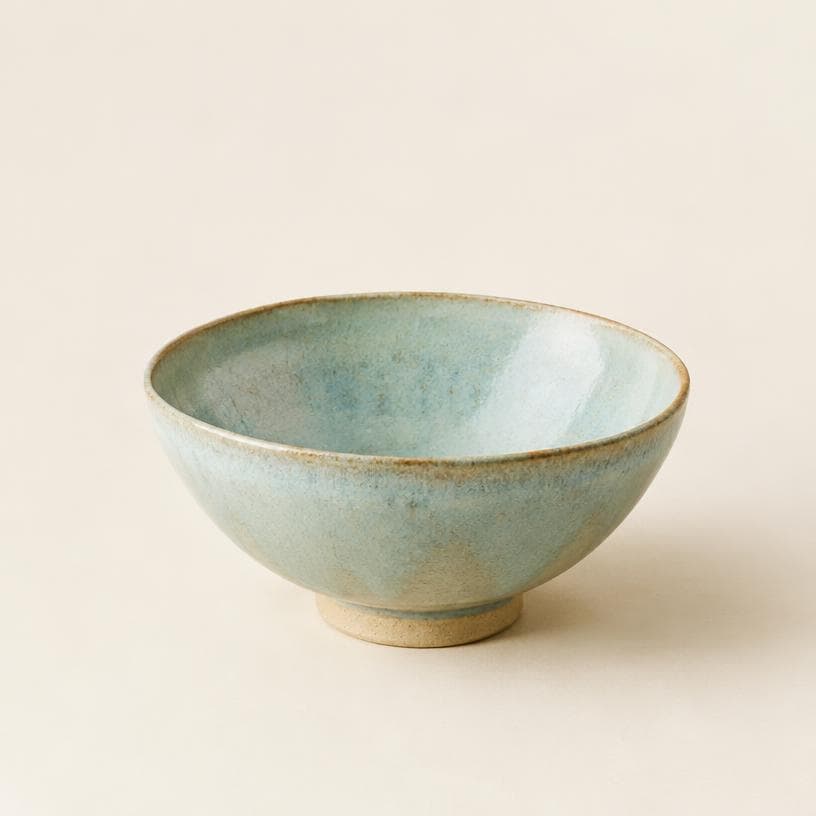
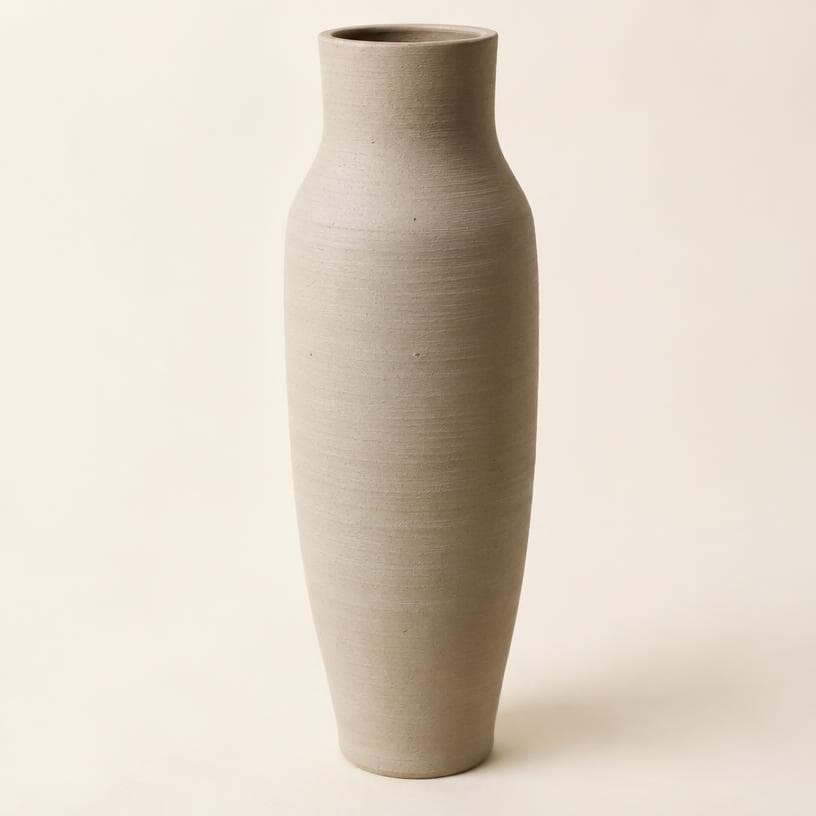
A glaze combination works. A shape fires beautifully. A piece comes out exactly right.
Then weeks later you’re asking:
Claymate keeps those answers attached to the work itself.
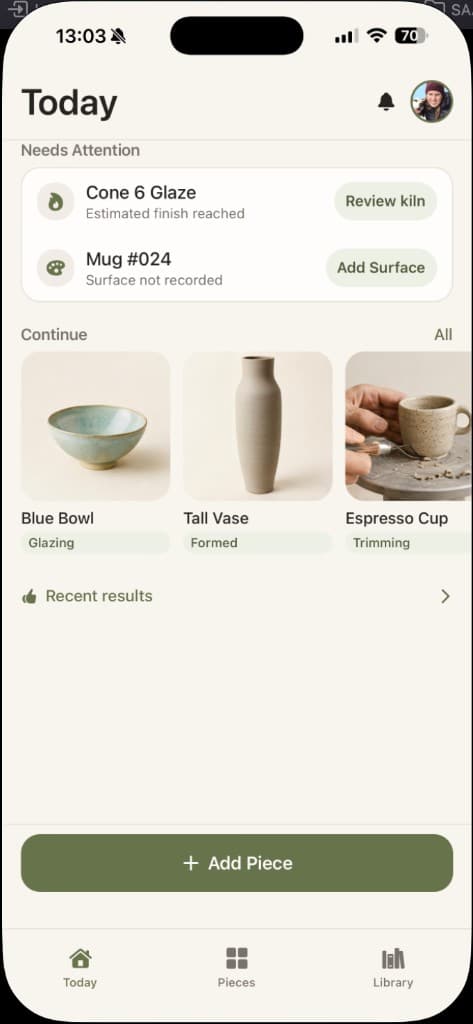
Keep its photos, stage, clay, surfaces, location, firing context, measurements, notes and results together.
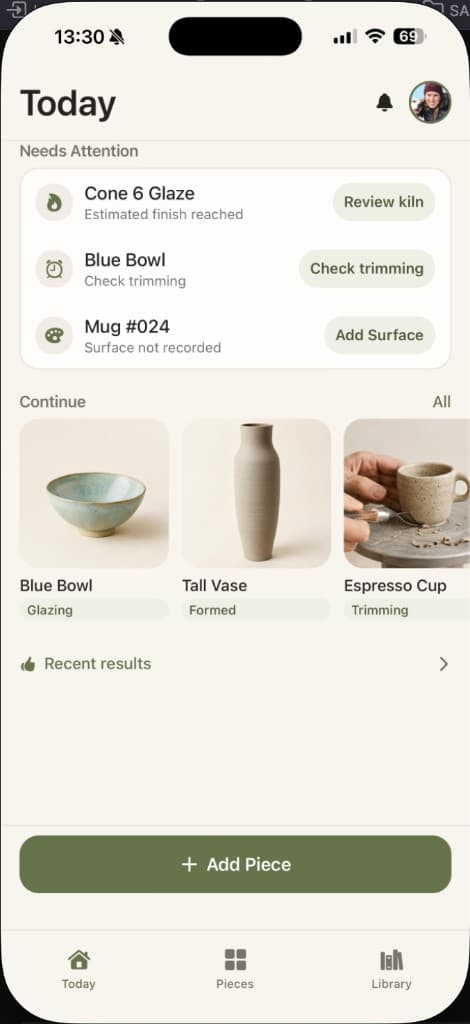
Open Claymate and see what needs action now, what you were working on and where to continue.
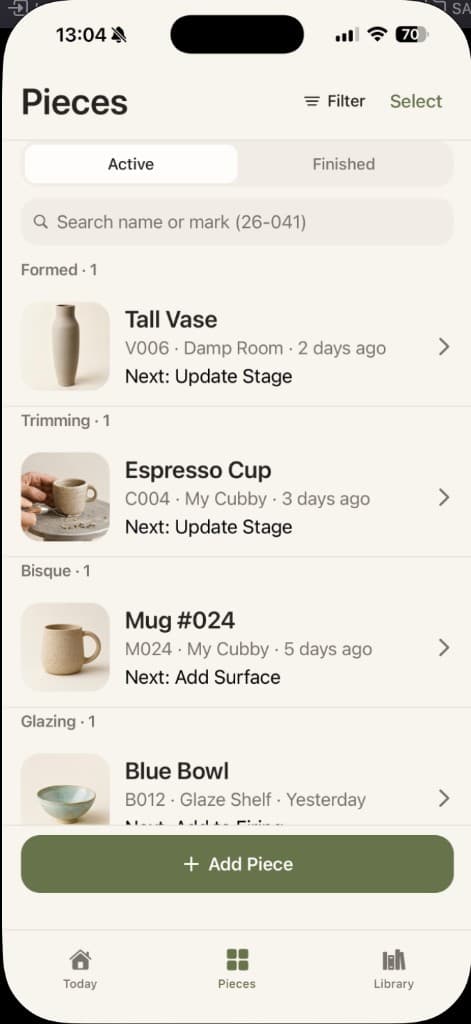
Search by name, studio mark, clay, surface, stage, firing details and more — without digging through camera rolls or notebooks.
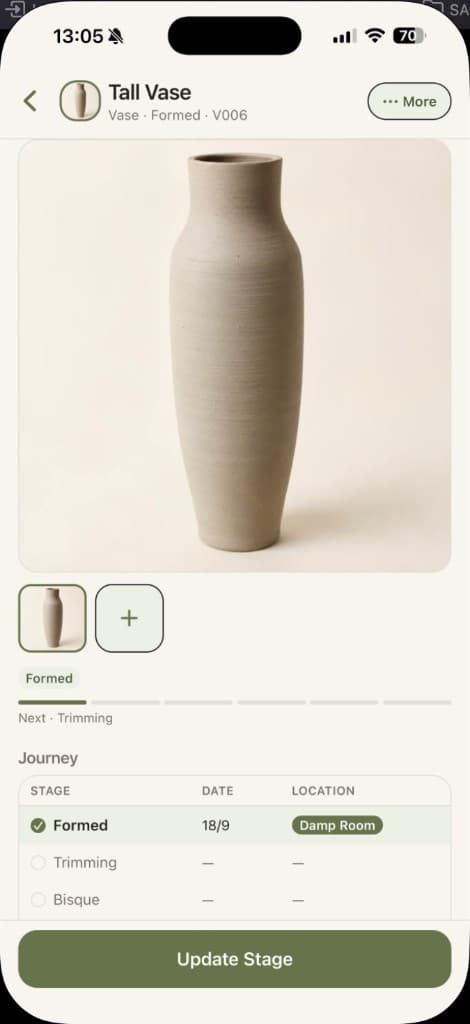
From forming to firing, keep the history of a piece without turning pottery into project management.
The best result isn’t much use if you can’t remember how you got there. Claymate keeps the setup behind successful pieces so you can come back months later and understand what you used — then Make Again.
Make Again copies the setup into a new piece. It does not change the original, and it does not copy photos or measured sizes.
Remember what worked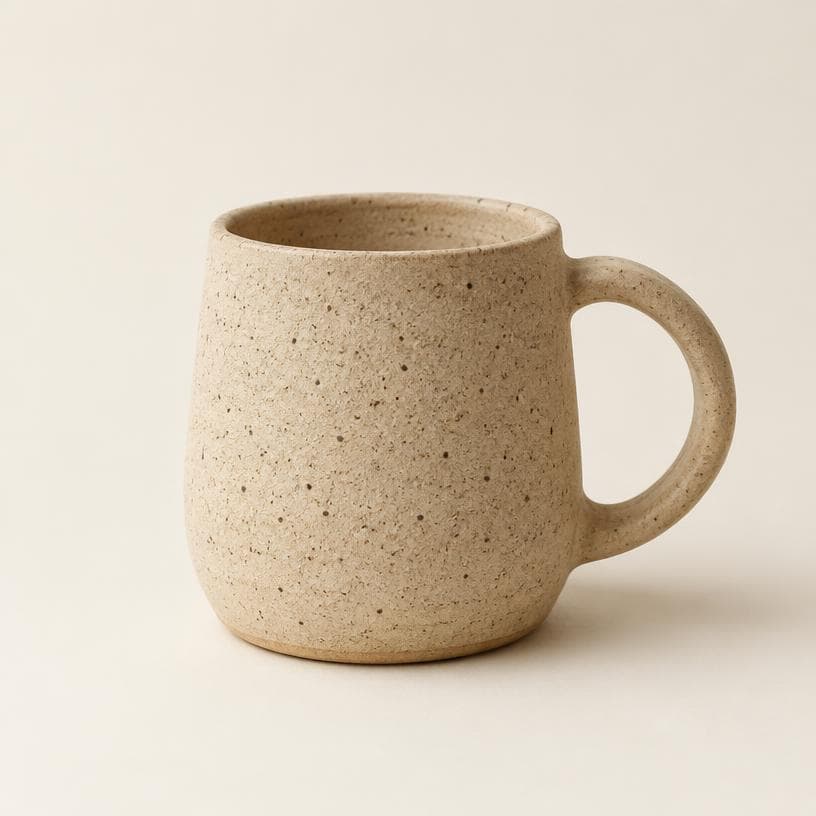
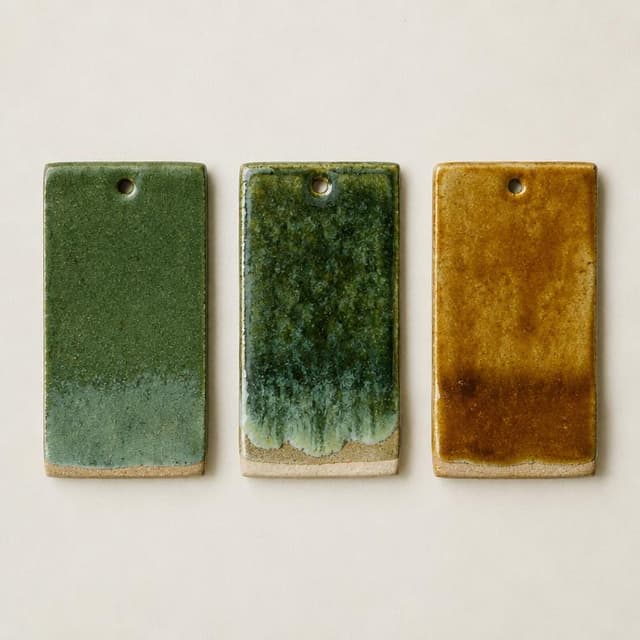
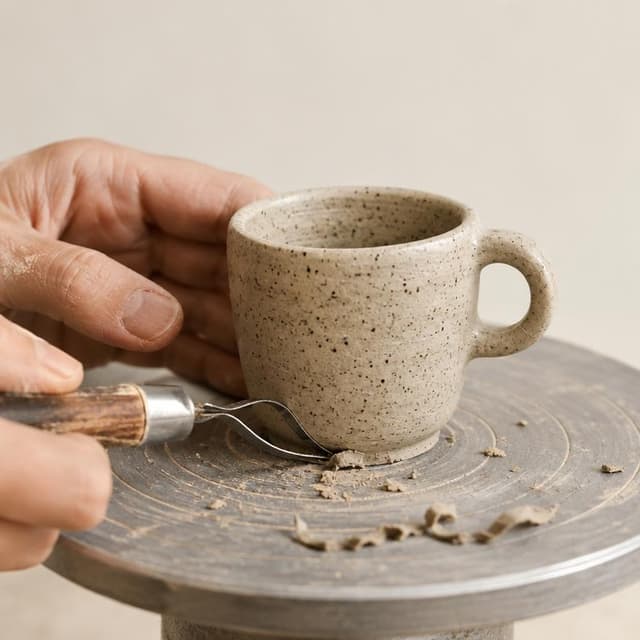
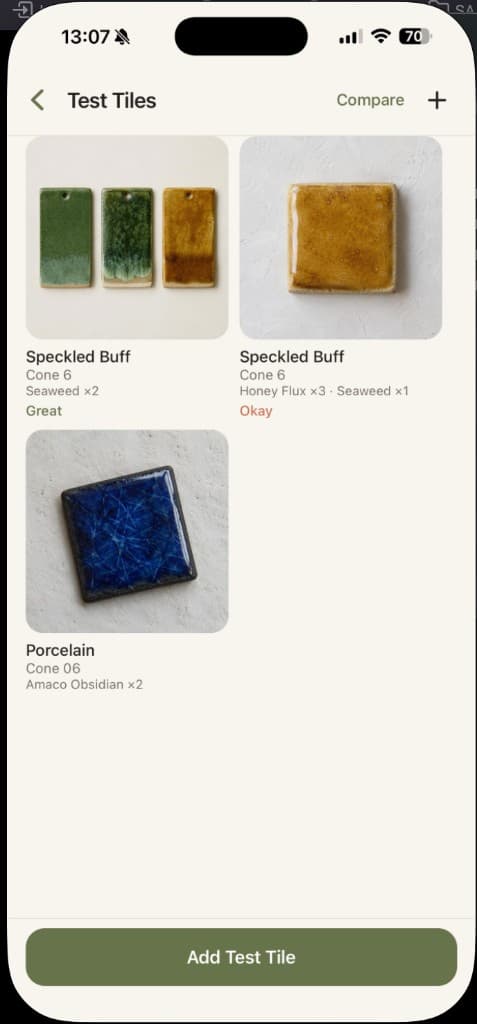
Keep surface layers in order, including coats, area and application details. Pair them with the firing context that produced the result.
Because A over B is not the same as B over A.
Claymate logs firings you record — type, cone, kiln, pieces and estimated finish. It does not control a kiln, and completing a firing does not rate your pieces for you.
Formed. Trimming. Bisque. Glazing. Firing. Finished.
Claymate keeps the journey visible while allowing real potters to customize their workflow. Trimming is in the default path; it is not required.
Claymate can give pieces simple studio marks so similar mugs, bowls, tests and batches don’t become impossible to tell apart.
Marks look like 26-041 — readable studio codes, not barcodes or QR labels.
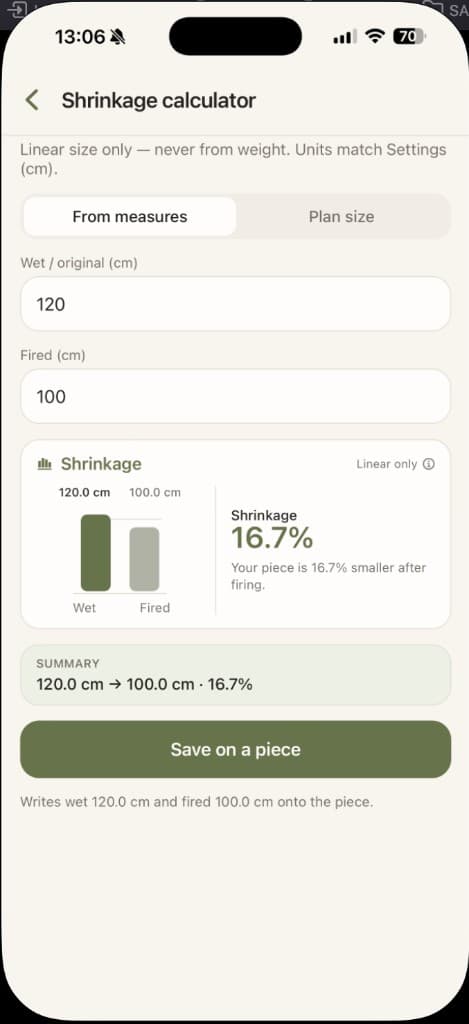
Record wet and fired linear measurements and let Claymate keep the comparison with the piece.
Linear measurements only. Never calculate shrinkage from weight.
Keep materials, recipes, test tiles, firings and tools close to the work they came from.
You do not need to build a library before you start. Create a piece first; add details when they become useful.
Your pottery history stays attached to the piece instead of scattered across notes, photos and memory.
Claymate is designed around quick studio actions, not forms you need to manage.
Results become useful context for the next piece instead of disappearing after the kiln opens.
The more real work you record, the more useful Claymate becomes.
Claymate is just getting started. Real potter stories will appear here as the community grows.
Remember every piece. Repeat what works.